

Justin
3:22
Get started with SEO, AEO and accessibility in Framer
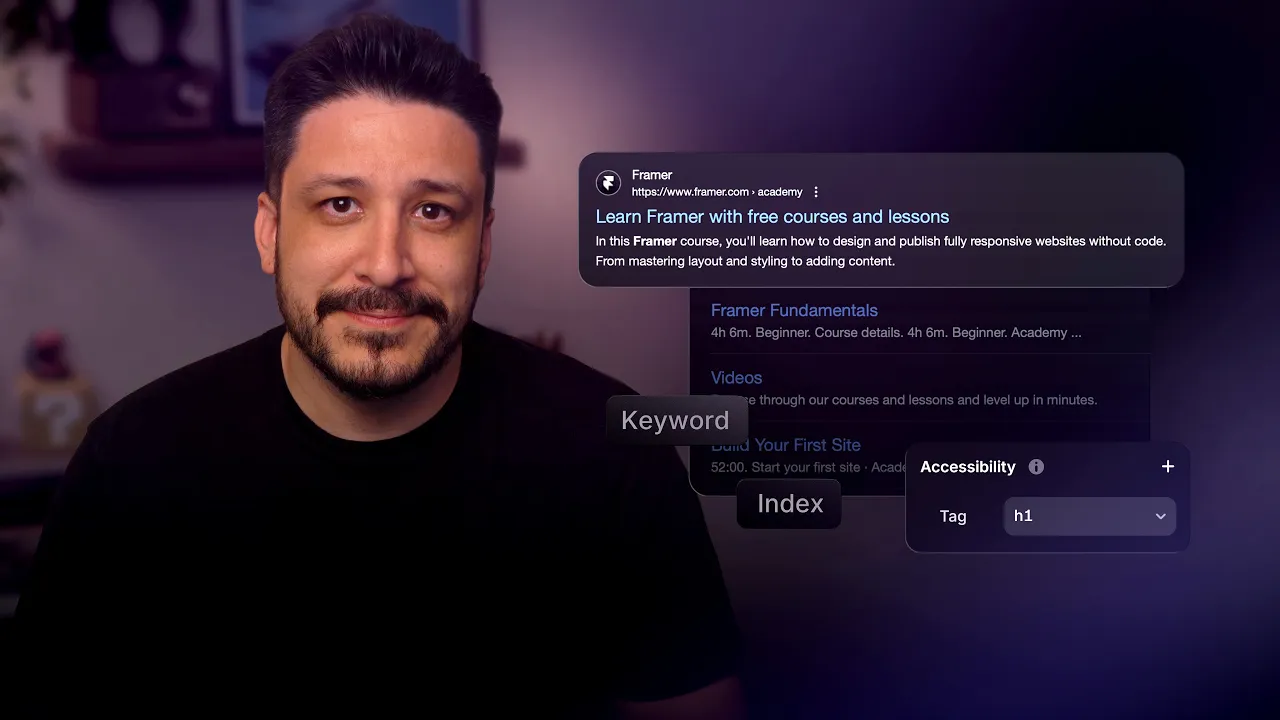
Learn how to get started with SEO and accessibility in Framer. Search engines don’t “see” your site the way people do. You will configure the relevant site or page settings, inspect the result, and keep the update ready for publishing.
Lesson details
Start with the page’s search intent, then write a clear title, description, heading structure, and useful body copy around that task. Add descriptive links and alt text, and use Framer’s page settings to control how the URL appears in search and when shared.
SEO and accessibility overlap when both make content easier to understand. Review the page with keyboard navigation, inspect the published URL, and track the queries that bring visitors back to the lesson or page.
Record the URL and the change, then watch Search Console after publishing. Impressions, clicks, and ranking queries show whether the page is being understood for the intended topic.
Frequently asked questions
How do I get started with SEO and accessibility in Framer?
Learn how to get started with SEO and accessibility in Framer. Search engines don’t “see” your site the way people do. You will configure the relevant site or page settings, inspect the result, and keep the update ready for publishing.
What does this lesson cover?
The lesson covers the settings and steps used to get started with SEO and accessibility in Framer. You will configure the relevant site or page settings, inspect the result, and keep the update ready for publishing. Follow the demonstrated order in your project and review each change on the canvas before moving to the next step.
What should I verify after changing SEO settings in Framer?
Check the page title, description, URL, heading structure, images, and links that the lesson covers. Preview the page and confirm that the live-facing settings match your intent. Publishing is a separate step, so you can review the configuration before the change reaches visitors or search engines.
Do these settings affect every page in Framer?
Some settings apply to one page, while site settings can affect the whole project. Check the scope of each control shown in the lesson before changing it. Review page-specific metadata and the global site configuration separately so one update does not overwrite another page’s intended search information.
What should I review after I get started with SEO and accessibility in Framer?
Review the exact pages and elements changed by the workflow. Confirm that copy, links, accessibility, responsive behavior, and interaction states still work as intended. Use preview for the final check and keep publishing separate from editing so you can fix problems before visitors see the update.
Continue watching
Load more