

Justin
9:28
Use Events for nested interactions in Framer
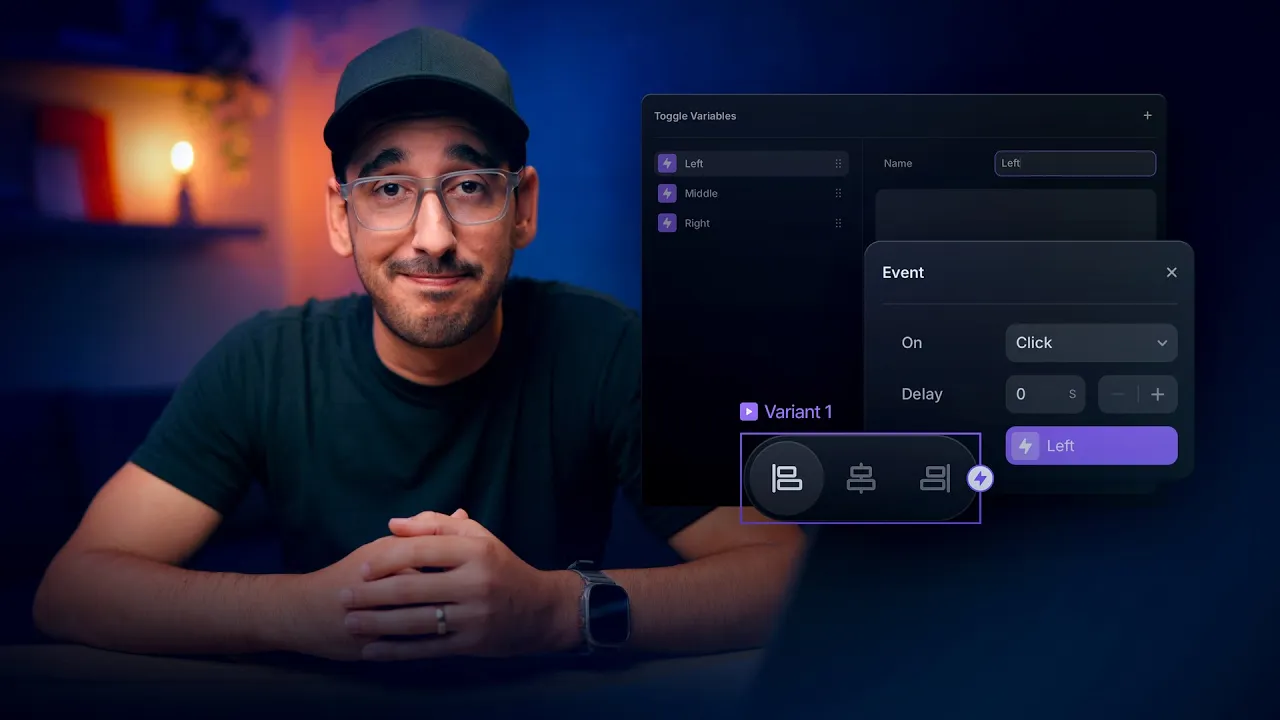
Learn how to use Events for nested interactions in Framer. Sometimes you end up with an interaction inside of a Component that you need to trigger from outside of that Component. You will configure the relevant effect, trigger, and transition, then preview the interaction across breakpoints.
Lesson details
Use Events to let a nested element trigger a change in its parent Component. Define the Event on the inner Component, expose it through the parent, and connect it to the Variant or interaction that should respond.
This keeps nested interactions reusable without hard-wiring every instance. Test the Event from each child state and confirm that keyboard and pointer input reach the same outcome.
Preview the effect as part of the full page sequence. Timing that feels right in isolation can become slow or noisy when several sections animate during the same scroll.
Frequently asked questions
How do I use Events for nested interactions in Framer?
Learn how to use Events for nested interactions in Framer. Sometimes you end up with an interaction inside of a Component that you need to trigger from outside of that Component. You will configure the relevant effect, trigger, and transition, then preview the interaction across breakpoints.
What does this lesson cover?
The lesson covers the settings and steps used to use Events for nested interactions in Framer. See Using event variables. Follow the demonstrated order in your project and review each change on the canvas before moving to the next step.
Which animation settings should I test in Framer?
Test the trigger, start and end states, timing, easing, and replay behavior used in the lesson. Preview the interaction at different viewport sizes and confirm that it supports the page hierarchy. Reduce or remove motion that distracts from content or makes controls harder to use.
Can I use this animation on a responsive site in Framer?
Yes. Preview the effect at every affected breakpoint and resize between them. Check trigger positions, clipping, motion distance, and the start and end states at narrow widths. Adjust the layout or effect when the animation obscures content or moves an interactive element away from its expected position.
What should I review after I use Events for nested interactions in Framer?
Review the exact pages and elements changed by the workflow. Confirm that copy, links, accessibility, responsive behavior, and interaction states still work as intended. Use preview for the final check and keep publishing separate from editing so you can fix problems before visitors see the update.
Continue watching
Load more